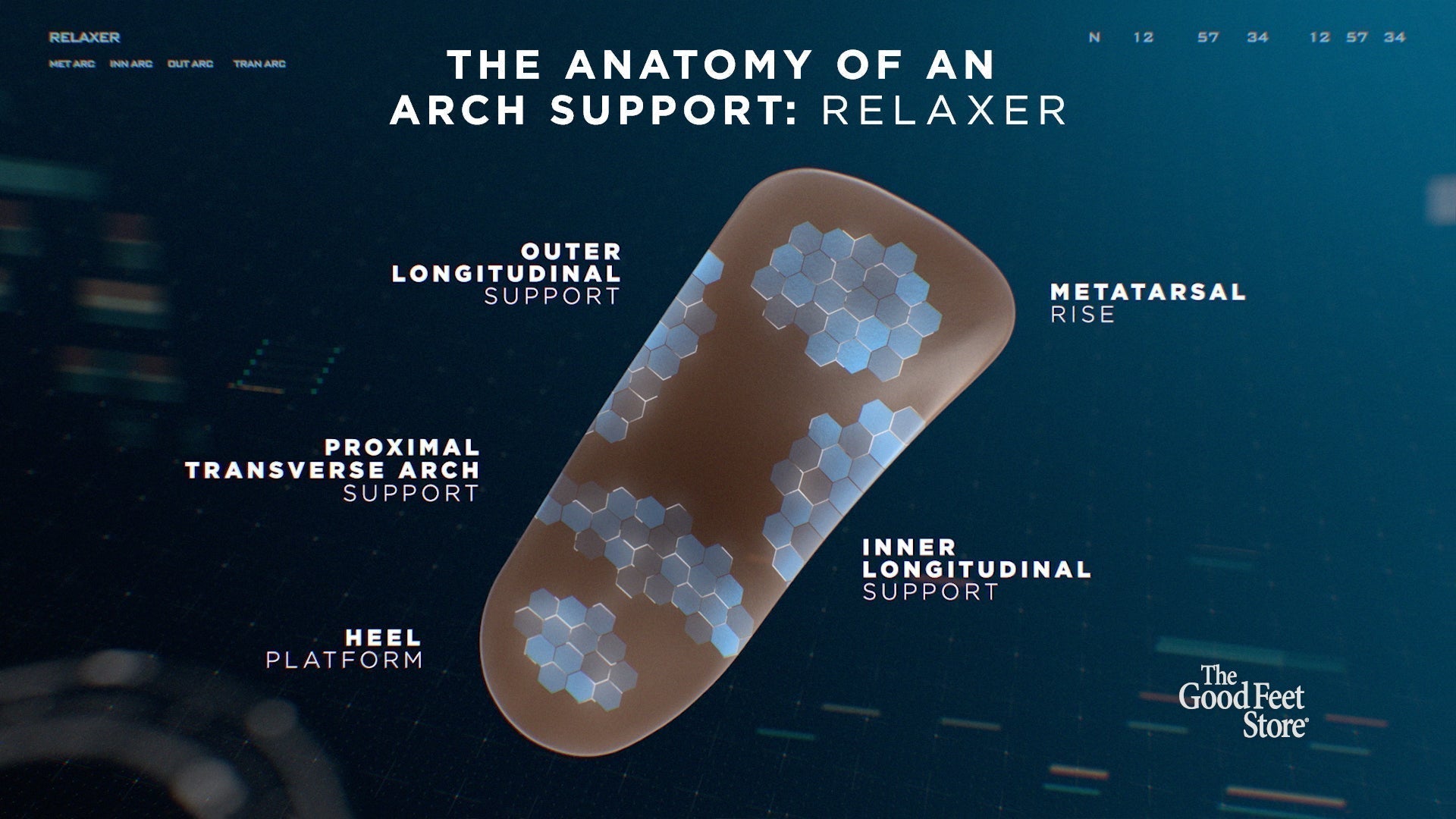
5 Ways to Make Sure Your Shoes Have Proper Arch Support
Your feet bear your whole body weight, absorb the shock, and balance your body throughout the day. However, few of us give the attention one of the essential elements in foot care deserves: arch support. Whether one is walking, running, or even standing for extended periods of time, proper arch support in shoes ensures comfort, balance, and long-term joint health.
These conditions can bring a number of problems, from heel pain to plantar fasciitis, knee strain, and even back problems any time you are in shoes that fail to offer good arch support. Fortunately, you don’t need to be a podiatrist to recognize the signs of proper arch support in your footwear. Here are five simple ways to ensure your shoes provide the right arch support for your feet.
Understand Your Foot Arch Type
As everyone has differently shaped and sized feet, being able to understand the type of foot arch will help an individual determine if his or her shoes will be supportive or not. Of course, it all will depend on whether one has a low, medium, or high arch.
Types of Foot Arches:
Low Arch (Flat Feet)
Individuals who have flat feet have little or no arch at all. While walking and running, the foot overpronates-that is, it rolls inward-which may stress the ankles and knees. The best shoes for a person with flat feet should feature strong medial or inner arch support and include stability features that will control excessive pronation.
Normal Arch
While the normal arch has natural shock absorption and balance, the neutral arch also benefits from a shoe with moderate arch support to promote healthy alignment and help reduce fatigue.
High Arch
Where high arches are concerned, less area of your foot touches the ground, and all the pressure falls on the heel and the ball of the foot. Therefore, cushioned insoles with increased arch support distribute weight evenly, hence offering stability to the foot.
How to Determine Your Arch Type:
First, a simple "wet test" can be performed.
-
Wet the bottom of your foo
-
Step onto a piece of paper laid on a flat surface.
-
Observe the footprint:
-
If you see a full outline, you have flat feet.
-
If half of the arch shows, you have a normal arch.
-
You have a high arch if you can see the heel and the ball, and if there is a narrow connection between the two.
Knowing your arch type will help you to select appropriate shoes to give you good arch support, which will keep you comfortable and thus reduce the likelihood of strain.
Insole and Midsole Structure
Normally, the insole and midsole provide the arch support. A supportive shoe is usually not about how it looks but what is inside the shoe that constitutes the support.
Here's what to look for:
Rigid yet flexible insole
This should be somewhat contoured to the shape of your arch, but not flat. Press down with your thumb; it should feel firm, yet never rock hard. If this collapses easily with pressure it will not provide adequate support.
Raised Arch Contour
A good insole should have a well-pronounced arch bulge under the middle of your foot to avoid excessive rolling inward. This keeps the foot in its natural position.
Supportive Midsole Material
The midsole is the layer between the insole and the outsole and should be made of EVA, or ethylene-vinyl acetate, and/or polyurethane. Both of these will give great cushioning and provide structure to your arch to support it through each step.
Removable Insoles
If your shoes happen to have removable insoles, then that is a plus. Just replace them with either orthotic insoles or custom inserts that best suit your arch type for better support and comfort. Note that while flat, soft insoles may be comfortable for a while, they offer little support for the arch over time and could cause fatigue or even pain.
Perform the Bend and Twist Test
Another equally good and reliable test to check whether your shoes offer good arch support is the bend and twist test. This simple test will show whether the shoe has the right balance between flexibility and stability-features so important for keeping proper foot alignment.
How to Do It:
-
Bend Test
Hold your shoe from both ends, heel and toe. Now try to bend it.
-
A good shoe should bend only at the ball of your foot, where your toes flex, and not in the middle.
-
If it folds easily in the middle, that means there's little to no arch support and hence your feet are bearing all the strain.
-
Twist Test
Hold the heel in one hand and the toe in the other, then twist the shoe in opposite directions.
-
A shoe with proper support should resist twisting.
-
If it twists easily, that is a sign the shoe lacks the structural stability it needs to support your arch.
This test is useful when shopping for walking or running shoes. Proper arch support will allow natural movement while maintaining the shoe's structure under pressure.
Look for Supporting Design Features
With a host of technologies integrated into modern shoes to enhance arch support, among other foot health attributes, it is necessary to look for certain design features that provide comfort and stability while buying any new pair of shoes.
Features To Look Out For
Contoured Footbed
The contoured footbed emulates the natural shape of your foot through giving uniform support to your arch, heel, and forefoot.
Firm Heel Counter
The heel counter, or back portion of the shoe, should be rigid enough to keep the heel in place. It acts to prevent overpronation and keeps your arch aligned correctly.
Deep Heel Cup
A deep heel cup provides stability for your foot in such a way that your arch maintains its height and does not go inward.
Arch-Specific Inserts
Shoes may have inbuilt or removable arch inserts which may cater to one of these arch types. If a shoe allows customization, then you could add inserts specifically for flat, normal, or high arches.
Quality Construction
High-quality shoes use durable materials that do not easily lose their shape. Cheaper or overly flexible shoes have the tendency to flatten out, offering less arch support over time.
For active people, look for shoes labeled as "stability," "motion control," or "supportive." These terms mean special features to protect the arch and reduce strain.
Comfort and Alignment Test while Walking
Although it may look quite supportive in design, the real test is how it feels as you walk-your feet should feel stable, in balance, and comfortable from heel to toe. Here's how you check it properly:
Steps to assess comfort and arch support:
Walk on hard surfaces
Instead, walk on a hard floor instead of carpet. Note your arches: You should feel evenly balanced in a properly supportive shoe with no pressure or pain in the heel and arch area.
Look for even weight distribution
The weight should fall equally on the feet when standing still. If a shoe shifts in towards the inner foot and heel while standing, it probably doesn't have enough arch support.
Observe your posture
Proper arch support improves posture. You will notice less slouching or rotation of the knees inward when your shoes are supportive.
No pain or fatigue
They should not be causing discomfort to your feet after a few hours of wear. If you feel pain, tingling, or fatiguing in your arches and heels, that's indicative of poor support
Why Proper Arch Support Matters
Few people appreciate the importance of arch support, thinking that it is important to athletes or individuals with conditions of the foot alone. As a matter of fact, good arch support affects those who engage in office work and running alike.
Why it matters:
- Prevents Foot Pain: Relieves foot pain by minimizing stress to the plantar fascia, heel, and metatarsals.
- Improves Posture: Improves your posture and maintains proper alignment of the feet, knees, hips, and spine.
- Enhances Stability: It enhances stability by reducing overpronation or supination.
- Reduces Fatigue: Because it supports the foot's natural arch, it minimizes fatigue from continuous standing or walking and thus prevents possible muscle strain.
- Longevity of Footwear: A well-supported shoe will last longer and comfort the foot with consistency.
Poor arch support gives rise to chronic conditions including plantar fasciitis, shin splints, Achilles tendonitis, and even knee and lower back pain. Spending the time necessary to find the right shoe pays off in the end for long-term health.
Bonus Tip: Upgrade Your Shoes with Custom Insoles
So, if your current pair does not have perfect arch support, you can easily fix that with a pair of orthotic insoles. As a matter of fact, these inserts were designed to provide customized support based on one's arch type and activity level.
- For flat feet: The best recommendations for flat feet are firm insoles, which correct overpronation.
- For high arches: They can be used because cushioned insoles for high arches absorb shock.
- For normal arches: For normal arches, a balancing of moderate support is used where excessive fatigue is not allowed to set in.
Prescribed custom orthotics by a podiatrist will probably be most effective, especially for those who suffer from chronic foot pain. They offer specific support, catered to the structure of your foot and your daily movement patterns.
Conclusion
Proper arch support is the groundwork for good foot health. Your shoes should support your arches and align your whole body when walking, running, or standing all day. Know your foot type, take a look at the structure of the shoes, test their flexibility, examine design features, and finally, test comfort-all just to make sure your footwear keeps you supported at every step. This is not just about comfort; it is about preventing pain in the future, improving your posture, and keeping you active and healthy. Next time you go to buy a pair of shoes, remember these five simple checks and give your feet the arch support they really deserve.
FAQ’s
How will I know whether my shoes have good arch support?
You will know because it follows your foot's natural curve, especially under the arch area. Press on the middle, and it should feel firm and slightly raised. Do the bend and twist test: supportive shoes bend only at the toe area and resist the twisting in the middle. Your feet should feel stable, evenly balanced without pressure or pain in the arches or heel as you walk.
Can arch support be added to my existing shoes?
You can always upgrade your shoes with orthotic insoles or over-the-counter arch supports. Choose inserts based on your arch type-low, normal, or high-for best performance. Such insoles would reduce foot fatigue, prevent overpronation, and raise comfort. Many of these can be trimmed to fit inside your shoes perfectly and give an upgrade in support without necessarily having to buy new footwear.
What if I wear shoes that don't have proper arch support?
Long use of shoes lacking arch support creates a number of problems. Very often, heel pain, plantar fasciitis, arch strain, knee discomfort, or even lower back pain may result from these conditions. This is because, without the support, your arches may collapse or overpronate and throw your whole posture off kilter. Continual use of unsupportive shoes raises the risk of misalignment in the feet and chronic pain over the long term.
How often should shoes with arch support be replaced?
Generally speaking, supportive shoes can last anywhere from six months up to a year depending on their frequency of wear. When you do happen to notice some flattening in the insoles, midsoles that wear out, or increased discomfort during walking, it is time to change them. Runners, and those needing to stand for a lot of periods, may want to change them even more frequently. Keeping your arch support in good condition will let you enjoy consistent stability and comfort.
Are arch support shoes only meant for people who have some kind of problem with their feet?
Not really, good arch support is helpful for everybody, not just those people who have some kind of problem with their feet. Supportive shoes mean healthy posture, improved balance, and reduced strain if one needs to stand or walk for extended periods. They reduce the chances of some possible conditions later in life, such as plantar fasciitis or heel pain. Think of them as an investment in comfort and long-term foot health rather than a medical need as such.